


 Book an Appointment

Jayanagar
+91-8317310513Kengeri
+91-9692108108- Home
-
High-Precision 640-Slice CT Scan
High-Precision 640-Slice CT Scan
Full Body CT Scan
Heart CT Scan
Speak with our specialist
Bangalore Hospitals proudly introduces the 640 Slice CT scanner, the first of its kind in India.
This advanced technology offers fast, precise imaging, improving heart health care and more.
It’s a significant advancement in CT imaging in Bangalore, helping us provide better outcomes for our patients.
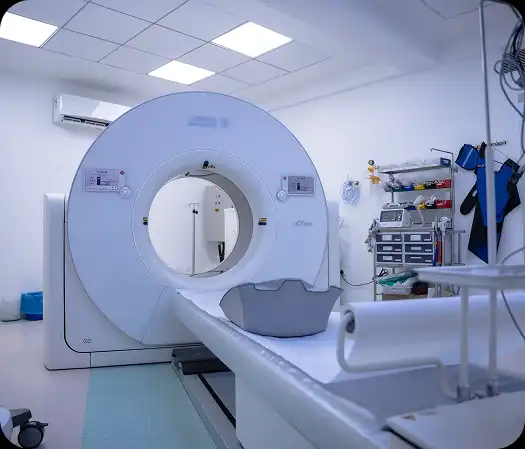
Top Features of the High-Precision 640-Slice CT Scanner:
- Wide Bore Design for Enhanced Patient Comfort
- Advanced Metal Artifact Reduction
- 4D Imaging Capabilities
- Reduced Need for Sedation
- High-Resolution Imaging for Early Disease Detection
- Versatility Across Multiple Medical Specialities
We invite you to consult with our expert team for a comprehensive evaluation and personalised treatment plans tailored to your health needs.
Minimal Radiation Exposure
Maintains excellent image quality while significantly reducing radiation levels during scans.
Committed to Your Heart’s Well-being
The 640 Slice CT Scanner at Bangalore Hospitals is transforming cardiac care, bringing advanced heart diagnostics and world-class imaging right to our community.

Unmatched Expertise in Heart Health
At Bangalore Hospitals, we are dedicated to raising the standard of heart care. With the 640 Slice CT Scanner, we are able to:
- Provide faster, safer, and more accurate diagnostics.
- Support early intervention to prevent serious cardiac events.
- Enhance overall heart health outcomes for our community.
By investing in this advanced technology, we reaffirm our commitment to offering the highest level of care to both our patients and the community.
Schedule your consultation today and take a proactive step towards better heart health at Bangalore Hospitals.
 Book an Appointment

Get More Insights
Advanced CT Imaging and Diagnostic Care in Bangalore
Accurate and timely imaging plays an important role in many medical decisions, especially when conditions require detailed internal views to guide care. Scans that visualise the heart, abdomen, lungs, or other body regions help clinicians understand what may be happening beneath the surface.
Bangalore Hospitals provides the services with high-end imaging equipment such as a 640-slice CT scanner capable of facilitating quick and accurate assessment in a wide variety of situations. This approach integrates imaging with clinical insight, creating a foundation for clearer decisions rather than prolonged uncertainty. With quicker turnaround times and detailed visualisation, patients and healthcare teams can address concerns without unnecessary delay or repeated testing.
How CT Scans Support Clinical Evaluation
Computed tomography remains widely used because it reveals internal structures in ways that physical examinations cannot. A CT scan combines X-rays and computer processing to deliver layered images showing tissues, organs, and blood vessels with clarity. These images are used across routine assessments, emergency evaluations, and planning further care. In many cases, body scans are recommended when symptoms are persistent, unclear, or involve multiple systems. Such scans allow clinicians to identify early changes and decide on appropriate next steps with greater confidence.
CT imaging also supports faster clinical decisions when time matters. Clear imaging reduces guesswork and helps doctors move forward without delay.
The Role of Full-Body and Organ-Focused Scans
Imaging needs vary depending on symptoms and clinical findings. An mri scan of body structures may be advised when soft-tissue detail is required or when CT findings need further clarification. In other situations, a stomach checkup may involve imaging to help identify causes of pain, discomfort, or unexplained digestive symptoms.
Diagnostic imaging does not replace clinical judgement. Instead, it supports it by offering visual confirmation that helps doctors rule out conditions or narrow possibilities. Whether planned or urgent, scans often reveal details that may otherwise remain hidden.
Advanced scanners capture high-resolution images quickly, which is important when scans are part of a wider hospital service that prioritises accuracy, comfort, and coordination of care.
Speed and Precision: The 640-Slice CT Advantage
The 640-slice CT scanner available at Bangalore Hospitals represents a significant step forward in diagnostic imaging. It combines speed, clarity, and safety to deliver images within seconds. This capability is particularly valuable during cardiac assessments, trauma evaluation, and other time-sensitive situations. For example, heart-related body scans that once required longer scan times can now be completed rapidly, allowing clinicians to proceed with confidence.
Faster imaging helps reduce patient anxiety and shortens the wait for results. It also improves the detection of small or early changes that may indicate developing conditions. These images do not replace medical judgment, but they support it by providing detailed information that guides care decisions.
Diagnostics Across Different Care Needs
Imaging supports a wide range of healthcare requirements. In general medical settings, scans help identify conditions that may need further evaluation or referral. For patients undergoing medical treatments that require monitoring, imaging becomes part of the ongoing assessment process. Clear and accessible images allow clinicians to confirm progress or adjust treatment plans when needed.
Imaging also supports care pathways linked to maternity and emergency services. In hospitals recognised as the best hospital for pregnancy, diagnostic imaging is used carefully to balance safety with clinical need. Likewise, facilities equipped as hospitals with icu rely on fast imaging to support critical care decisions when patient conditions change quickly.
Linking Imaging With Broader Healthcare Provision
Imaging is most effective when it functions within an integrated care framework. Patients benefit when scan results are reviewed by clinicians who understand both the images and the wider clinical context. Imaging can inform paediatric care, injury assessment, or long-term management of chronic conditions.
When diagnostic services operate within a coordinated system, results feed directly into treatment planning, referrals, and follow-up care. This approach reduces fragmentation and helps patients avoid repeating tests across different facilities.
Conclusion
Advanced imaging continues to play an important role in how healthcare systems identify, monitor, and respond to internal health concerns. Bangalore Hospitals provides access to rapid, high-resolution CT imaging through its 640-slice system, supporting informed clinical decisions. For patients requiring body scans, broader diagnostic evaluation, or imaging that supports ongoing care, access to precise and timely imaging can lead to clearer next steps and more confident treatment planning