

 Book an Appointment

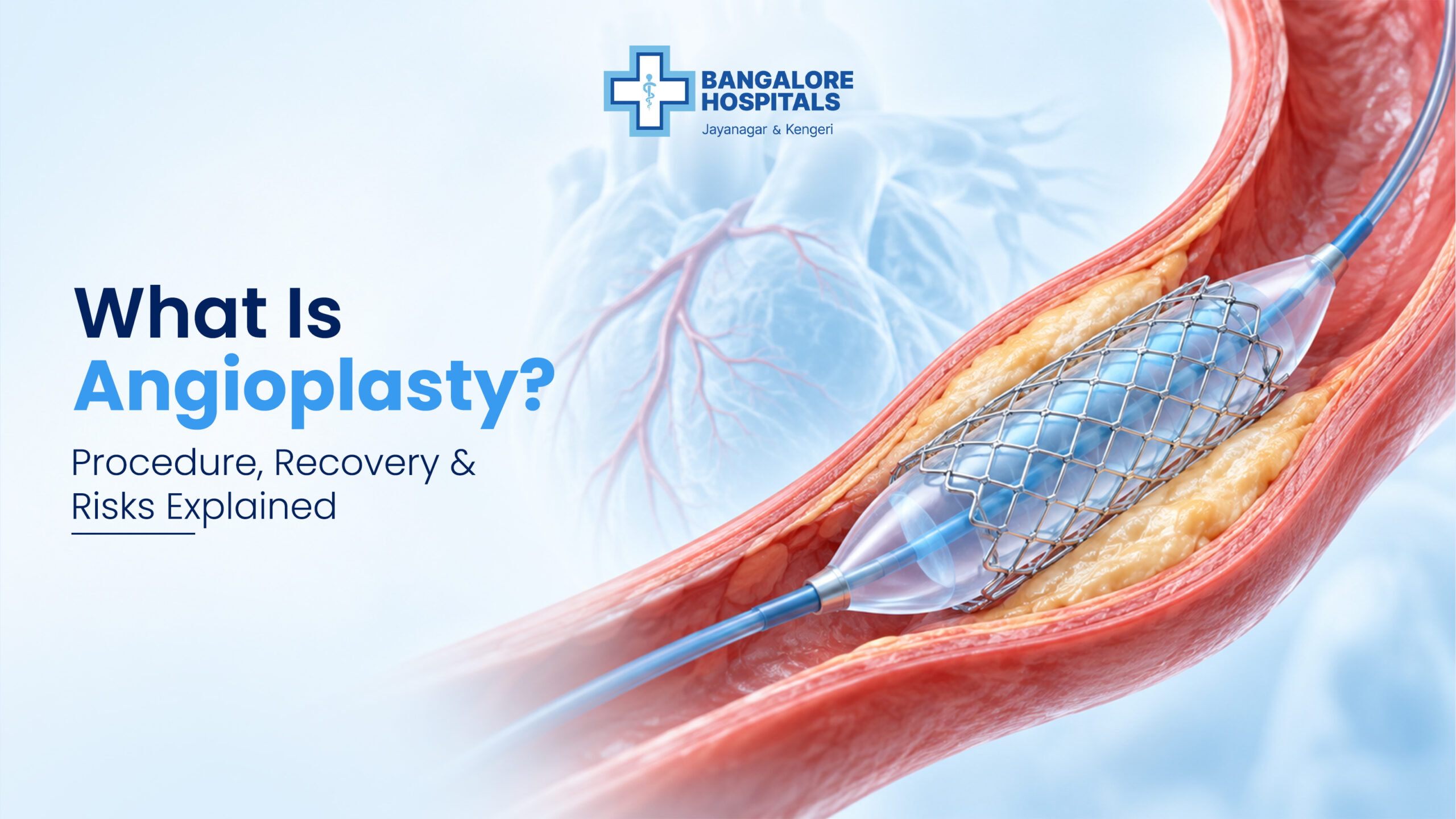
Angioplasty is a minimally invasive procedure that widens arteries blocked by plaque buildup. The main aim is to restore blood flow and prevent further complications. By definition, ‘angio’ means anything related to blood vessels, and ‘plasty’ signifies grafting or reconstruction of any body part. In general, angioplasty widens blocked arteries to save a life.
When patients come to hospitals with severe chest pain and doctors find an arterial blockage that hinders blood flow, doctors perform this procedure to prevent sudden damage to the heart muscle.
What Is Angioplasty and Why Is It Done?
During atherosclerosis, the blood vessels deposit fat and cholesterol that interfere with blood flow and narrow the blood vessels. At that point, cardiologists choose Angioplasty to widen the blocked or narrowed arteries and keep the heart healthy. In this process, a tiny medical balloon pushes the plaque and broadens the path. Angioplasty is less invasive than other vascular procedures, such as bypass surgery. However, the best option depends on the patient’s current health conditions and complications.
Types of Angioplasty
Based on the techniques, angioplasty is classified as follows:
- Balloon Angioplasty: A balloon-tipped catheter pushes plaque against the artery wall to improve blood flow.
- Stent Placement: A stent may be placed to keep the artery open. Stents can be bare metal or drug-eluting (medication-coated to prevent narrowing again).
- Coronary vs. Peripheral Angioplasty: Coronary angioplasty treats arteries in the heart, while peripheral angioplasty treats arteries in the neck, legs, arms, or kidneys.
What is an Emergency vs. Planned Angioplasty
Cardiologists perform angioplasty in emergencies where patients come in with sudden chest pain or a heart attack. The process limits heart damage right after or during the heart attack.
Angioplasty in Emergency Situation
Patients with unstable angina may require emergency angioplasty to relieve the constant chest pain and normalize blood flow. Some emergency conditions are listed below:
- Severe Blockages in the Arteries:
When fat and cholesterol are deposited in the arteries, they narrow the blood vessels and restrict blood flow. Therefore, restricted blood flow increases chest discomfort, severe pain, and shortness of breath and eventually precipitates heart attacks. During this critical situation, angioplasty is the way to save the heart from further deterioration.
- Acute Myocardial Infarction:
Emergency angioplasty is beneficial for patients suffering from acute myocardial infarction. The procedure helps restore heart muscle function and blood flow and prevents further complications. In an emergency, angioplasty is a life-saving procedure that acts quickly to keep the patient healthy.
Planned Angioplasty
Planned angioplasty is most common for patients with long-term heart complications or poorly managed heart disease, or having some other health issues that affect heart function. Some instances are listed below:
- Poorly Managed Heart Disease:
Patients with consistent coronary artery disease may experience chest pain, shortness of breath, and sweating. If medications and lifestyle changes are unable to relieve the condition, then angioplasty is the best option to assist the patient in returning to normal life.
- Patient with Diabetes:
High blood sugar levels for a long period of time increase the risk of coronary artery disease compared to non-diabetic patients. Diabetes causes multiple cardiac risks that can cause severe heart attacks. In this situation, cardiologists may prefer angioplasty to reduce risk.
- Recurrent Blockage after Bypass:
Patients with coronary bypass graft surgery can later develop blockages and be treated with angioplasty. After bypass surgery, if patients develop symptoms like angina due to recurrent blockage, this procedure removes the blockage and restores blood flow. This reduces the risk of another bypass surgery and helps manage the condition.
- Severe Coronary Artery Disease:
Angioplasty is recommended in patients with heart failure and severely narrowed arteries. In this condition, the heart cannot pump blood properly, which can cause tiredness, fluid buildup, and other serious problems. Angioplasty can also ease heart failure symptoms like swelling and shortness of breath, improving the patient’s quality of life.
- Non-Responding to Medications:
Angioplasty is suggested when a patient’s condition doesn’t get better with medicines like nitrates, beta-blockers, or statins, and the risk of heart attack or stroke is high. This procedure directly restores normal blood flow.
What is The Angioplasty Procedure – Step by Step
Before starting, you need to prepare mentally to make the procedure succeed. Some common tips before the angioplasty are:
- Avoid eating and drinking for 8 hours before the procedure; you can only take water and medicines
- Inform doctors regarding any allergic reactions related to contrast dye or any medication
- On the day of the procedure, bring some family members to provide moral and mental support
Angioplasty Procedure
- For the procedure, you lie on your back. A medical professional uses an IV to administer sedatives, medications that induce relaxation. However, you’ll still be conscious enough to obey directions.
- Throughout the process, certain monitors will check your vital signs, such as your oxygen levels and pulse.
- A professional administers local anesthetic to numb the area where a catheter will be inserted. Usually, this occurs in your arm or groin. During the process, you may feel pressure in the area, but you shouldn’t feel any pain.
- A healthcare professional uses a needle to enter a blood vessel. They insert a sheath into a large artery after sliding it over the needle.
- They use catheters and wires to reach the targeted artery through the tube.
- Fluoroscopy is the process by which an X-ray machine revolves around you. It lets the healthcare professional view the catheter’s trajectory from every angle.
- Once they reach the target artery, your provider injects a special dye into the tube. They examine it through X-rays to see how the dye passes through your artery. You may feel flushed or urinate for a short while.
- Using the imaging, the doctor can determine whether your artery is blocked or narrowed. They will use a guide wire to get across the trouble spot. This allows the catheter with a balloon tip to cross the wire.
- They will briefly inflate the balloon once they clear the obstruction. They might have to do this more than once.
- The doctor will review additional X-rays to assess how much blood flow has improved.
- After that, doctors often insert a permanent stent. After the balloon is removed, the stent keeps the artery open.
Types of Stents Used
In general, three main types of stents are used in this procedure: Bare-metal stents (BMS), Drug-eluting stents (DES), and Bioabsorbable stents. Stents are selected based on blockage severity, patient age, and current medical conditions.
- Bare-Metal Stents (BMS):
These stents are made of stainless steel or cobalt-chrome and provide permanent support to the artery walls. Use of BMS reduces the risk of heart complications but sometimes can cause scarring and lead to future blockages.
- Drug-Eluting Stents (DES):
As the name suggests, these stents are coated with drugs that prevent scar tissue formation and artery blockage. They also release medication over time to reduce inflammation and improve blood flow. They have more complications than BMS and are used in complex cases where a stent is already in place.
- Bioabsorbable Stents:
These stents are made of magnesium alloy and dissolve in the body within 2 years. They are not recommended for elderly people with calcium deficiency.
Which one is suitable for you depends completely on your health conditions. Discuss with your cardiologist which stent best helps keep your heart stress-free. Depending on your blood pressure, cholesterol level, and other risk factors, doctors will suggest the best way to prevent future complications. If you have questions about the angioplasty process, connect with Bangalore Hospitals; our modern, well-equipped cardiology departments will assist you further.
What are the Risks and Complications
The risk of coronary angioplasty includes:
- Re-occurrence of Blockage:
Sometimes blockages recur a few years after stenting. This is called restenosis, where scar tissue builds up inside the stent or its lining. However, it is rare, as the stent is coated with medicine that prevents this incident.
- Blood Clotting:
Blood clots may develop inside the stent. A heart attack may result from these clots that block the artery. Medication can reduce blood clot risk to some extent.
- Bleeding or Infections:
During angioplasty, a catheter is inserted into a blood vessel, typically in the arm or leg. At the insertion site, there could be bleeding, bruising, or infection.
Some other rare complications are:
- Heart Attack:
Sometimes patients suffer from heart attacks after or during the angioplasty due to severe tissue damage or restriction in blood flow.
- Coronary Artery Damage:
During coronary angioplasty and stenting, the coronary artery may be torn or ruptured. Some cases may require emergency open-heart surgery.
- Stroke:
A fragment of fatty plaque may come loose during angioplasty, migrate to the brain, and obstruct blood flow. One very uncommon side effect of coronary angioplasty is a stroke. To reduce the risk, patients take blood thinners throughout treatment.
- Irregular Heartbeats:
It is a very rare complication of the procedure. Medication or a temporary pacemaker may be required to treat these cardiac rhythm issues.
Patients with diabetes and hypertension are more prone to developing complications compared to others. However, the complications of re-stenosis occur after a few years of stenting and can be treated medically.
What is the Recovery Timeline
After angioplasty, you will need to stay in the hospital for a few hours to overnight for observation and complete recovery. As it is a minimally invasive process, patients can get day-care treatment. A few hours of observation without complications can result in discharge the same day as the procedure. But if some complications arise, 1-2 days of hospitalization are required to ensure patient safety. Close monitoring of the insertion sites is recommended for any redness, swelling, or bleeding. Contact the cardiologist if you feel fever, chest pain, numbness, fatigue, vomiting, or nausea after the procedure. Gradually, 1 week after the procedure, the patient can return to normal activities with medication and follow-ups.
What are the Precautions After Angioplasty
Angioplasty restores blood flow and helps keep your heart as healthy as possible. It is not a complete solution for your heart disease. After this procedure, patients must follow certain precautions to prevent further disease progression. Some common precautions after surgery are:
- Proper Medication:
Patients should take their medicines regularly after angioplasty. In general, some blood thinners and statin medicines are prescribed to prevent blood clotting, manage cholesterol levels, and reduce strain on the heart.
- Follow-up:
Proper follow-up with a cardiologist is necessary to assess your heart condition, stent function, and, based on your current health, adjust medications to support your well-being.
- Heart-healthy Diet:
A healthy diet helps heart patients stay healthy and active. Therefore, a high-fiber diet with less saturated and trans fat and cholesterol is beneficial. Avoid taking excess oil, salt, and sugar in your diet.
- Active Lifestyle:
An active lifestyle is key to keeping your heart healthy, but after angioplasty, patients should do light walking, running, and mild to moderate exercise. Avoid performing heavy lifting or strenuous exercises.
- Limit Smoking & Alcohol:
Smoking and alcohol consumption increase the risk of blockages and narrow the blood vessels that strain the heart muscles. Therefore, limiting these habits can ultimately help your heart work properly.
- Manage Stress:
Stress elevates blood pressure levels and increases heart rate. Some relaxation techniques help in managing stress and reduce the risk of heart-related issues.
- Monitoring BP & Blood Sugar:
Diabetes and hypertension increase the risk of artery blockages and heart attack many times compared to healthy adults. So keep monitoring your BP and blood glucose level to keep your heart healthy.
What is the Success Rate & Long-Term Outlook
Angioplasty provides immediate relief after the procedure; some patients notice improvement right away. It can reduce chest pain and breathing discomfort and improve energy levels. The stent also reduces the risk of plaque buildup in the same area.
In the long term, BMS lasts 5-10 years, but it carries a risk of restenosis. DES releases medication that prevents scar tissue deposition and works for 10-15 years or more. With bioabsorbable stents, blockage can occur within 6 months because no stent is used.
However, a study conducted on 136 patients with angioplasty, after one year of continuous follow-ups, recorded that 92.9% of patients developed re-clogging that required repeating the process, and some were ready for bypass surgery. So, it can be beneficial for short-term treatment, but in the long term it may precipitate complications.
What is the Cost of Angioplasty in Bangalore
The cost varies based on factors like doctor charges, hospital charges, the patient’s condition, the number of stents, and hospital stays. Experienced cardiologists with recognition and strong success rates often charge higher fees than others. In metropolitan cities like Bangalore, super specialty hospitals charge more because they have modern facilities and renowned doctors to handle severe cases. Similarly, ICU and normal bed charges also vary based on the hospital’s brand value and length of stay. In addition, the cost of angioplasty depends on the quality of the stent used. DES stents are more expensive and better at preventing restenosis. Whether patients need one or more stents also affects the procedure cost. Considering all factors, the cost of angioplasty in Bangalore can range from ₹67,000 to ₹410,000.
Angioplasty at Bangalore Hospitals
The cardiology department at Bangalore Hospitals includes experienced doctors and modern cath labs equipped to manage a wide range of cardiac problems and deliver high-quality care. We have Dr. C.N. Manjunath, one of Bangalore’s best cardiologists, and his full team provides personalized care and services. We also have Dr. Nischal N Hegde, a young, energetic doctor experienced in modern technologies, who provides quality care for cardiac patients. Dr. Raghu T R brings extensive experience in invasive cardiology, enriching our cardiology department.
We are now one of the best cardiology hospitals in South Bangalore. Our main aim is to develop the best course of action, planned by our skilled cardiologist. The hospital has a modern CT scan machine that can detect heart-related issues at an early stage. Our approach and expertise support a strong success rate for minimally invasive cardiac procedures like angioplasty. We focus on preventing and managing the risk factors to keep you healthy. Our hospitals offer 24/7 emergency cardiac support; reach out if any situation arises.
FAQs
- Is angioplasty a major surgery?
No. Angioplasty is not considered major surgery. It is a minimally invasive procedure in which a small cut is made to insert the catheter. Cardiologists make a small incision to get a thin tube to the heart, commonly in the wrist or groin. Some patients are discharged the same day, but most return home after 24 hours of observation.
- How long does angioplasty take?
An angioplasty procedure usually takes 30 minutes to 2 hours, depending on the patient’s criticality. However, the whole process, including preparation, procedures, and monitoring, takes one full day, and if the patient’s condition is not stable, then 1-2 days.
- Is angioplasty painful?
Angioplasty is typically not painful. Doctors apply local anesthesia before insertion. However, the patient can feel mild discomfort when the balloon inside the artery is inflated to clear the obstruction.
- How many days of rest are needed after angioplasty?
After a conventional angioplasty, you usually need to rest at home for two to seven days, though the exact duration depends on the reason for the treatment. For the first 24-48 hours after the procedure, rest the arm or leg used to introduce the catheter. Avoid excessive bending, heavy lifting, and strenuous physical activity.
- Can arteries block again after angioplasty (restenosis)?
Yes, restenosis is common after angioplasty. Studies show that 3-6 months after the procedure, the artery may re-narrow, which may require surgery again. However, using DES can reduce this risk, but it is more expensive than other stents.
- Is angioplasty safer than bypass surgery?
Angioplasty is safer than bypass, as angioplasty is a minimally invasive procedure, whereas bypass is an open-heart surgery. Angioplasty can treat multiple blockages in selected patients. However, people with complex or extensive coronary artery disease may benefit more from bypass surgery. The decision depends on the location and complexity of the blockages and the patient’s overall health.