

 Book an Appointment

When a doctor brings up the need for major surgery, the conversation rarely ends in the clinic. It carries forward into family discussions, second-guesses, and a steady search for clarity. In cities like Bangalore, where there are many top multispeciality hospitals, the difficulty is not access but selection.
We’ve seen this pattern often. Patients don’t just look for treatment. They look for systems that hold together under pressure. The expectation is simple. Safe surgery, steady recovery, and no surprises along the way.
At Bangalore Hospitals, most patients who come in for complex procedures have already spent time comparing facilities. What changes their decision is not a single feature, but how everything connects. That’s where clarity begins.
What Actually Makes A Surgery “Complex”?
Not every major surgery falls into the same category. Some procedures demand far more coordination than others.
Cardiac operations, neurosurgical work, spine procedures, organ transplants, advanced orthopaedic repairs, and cancer-related interventions typically fall into this bracket. The challenge is not just the surgery itself. It is the planning before and the monitoring after.
These cases tend to stretch across departments. A delay in one area affects another. That’s where hospital systems really show their strength or their gaps.
Why does the hospital you choose change the outcome
There is a tendency to focus only on the surgeon. That’s understandable, but incomplete.
Outcomes are shaped by the environment around the surgeon. Protocols. ICU readiness. Nursing response time. Even documentation discipline. Facilities that perform complex surgeries in Bangalore tend to operate on established pathways rather than improvising.
We’ve noticed that when systems are structured, complications are handled earlier. Recovery tends to be more predictable. Not perfect, but more controlled.
Looking Beyond Surface-Level Comparisons
Depth Of Medical Expertise
A hospital with multiple advanced surgery care departments is not just offering variety. It is offering backup.
Complex cases often shift direction mid-treatment. Having surgeons, physicians, anaesthetists, and rehabilitation teams working in proximity reduces friction. Decisions happen faster. Adjustments don’t require referrals across the city.
That continuity matters more than it appears on paper.
Infrastructure That Supports Precision
Technology is often discussed in broad terms. But the specifics matter.
Advanced imaging, operating theatres are designed for specialised procedures. Reliable intensive care units. Emergency response systems that don’t depend on external support.
These are not add-ons. They directly influence surgical accuracy and response time.
Experience You Can’t Shortcut
Hospitals that handle high volumes of major procedures develop a certain rhythm. Teams anticipate complications earlier. Processes tighten over time.
Patients usually sense this during consultations. Not through data sheets, but through how clearly the treatment pathway is explained.
Patient Safety Is Not A Department; It’s A System.
Safety practices don’t sit in isolation. They run across the entire hospital.
Infection control measures, medication protocols, surgical verification steps, continuous monitoring and documentation that tracks every intervention.
When these systems are consistently applied, variability reduces. Recovery becomes less uncertain.
Hospitals that prioritise patient safety in Bangalore tend to build these systems quietly. You don’t always see them. But you feel the difference when something unexpected happens.
When Multiple Specialists Sit At The Same Table
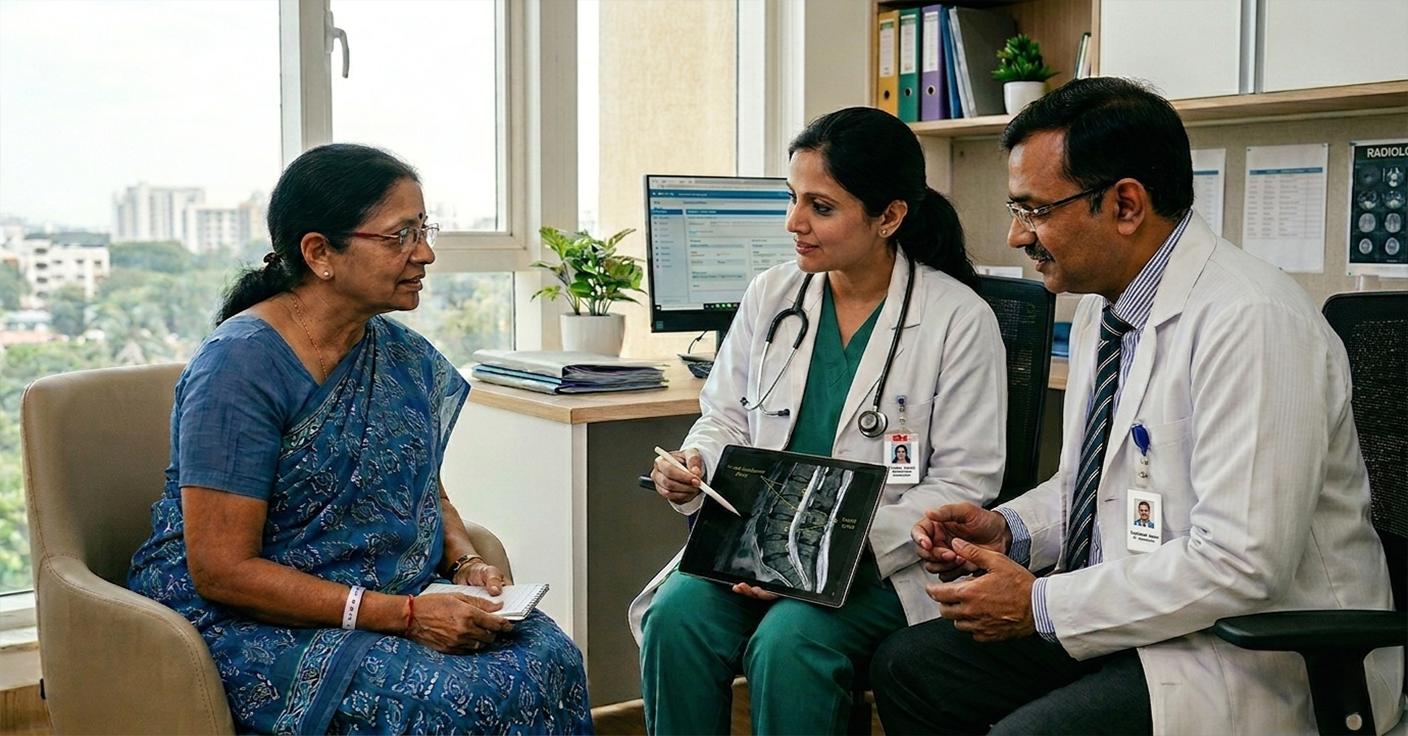
A single diagnosis can have multiple interpretations. That’s where multidisciplinary teams step in.
Instead of sequential opinions, discussions happen collectively. Surgeons, physicians, radiologists, and rehabilitation experts review the case together. Treatment plans evolve with broader clinical input.
It reduces blind spots. Not entirely, but meaningfully.
Second Opinions And Pre-Surgical Conversations
Patients often hesitate to seek a second opinion. In practice, it helps.
A second consultation can confirm the diagnosis or introduce alternatives. It also exposes differences in approach. That comparison sharpens decision-making.
Pre-surgical counselling, on the other hand, brings clarity to the process itself. Procedure steps. Recovery timelines. Lifestyle adjustments. Risks that are real, not theoretical.
Hospitals that take time to explain rather than rush tend to build more trust. It shows in patient preparedness.
How Bangalore Hospitals Approach Complex Surgical Care
At Bangalore Hospitals, the focus has been on keeping the process connected.
Consultations are not isolated. Complex cases are reviewed across departments. Diagnostics, surgery, and rehabilitation are aligned early in the treatment plan.
Critical care support is integrated, not reactive. Pre-operative and post-operative protocols follow defined sequences. Emergency handling and trauma support operate within the same framework.
Follow-ups are scheduled with intent, not as an afterthought. That continuity reduces drop-offs during recovery.
It’s not about claiming perfection. It’s about reducing variability wherever possible.
Recovery Does Not Begin At Discharge
A hospital’s role doesn’t end when the surgery is over.
Rehabilitation services, physiotherapy, nutrition guidance, and pain management shape long-term outcomes. Psychological support, when needed, often determines how well patients adapt post-surgery.
Discharge planning is another overlooked area. Patients who leave with clear instructions tend to recover with fewer complications.
This part is rarely highlighted during hospital selection tips.
A Practical Comparison Patients Often Miss
Not All Hospitals Operate The Same Way
|
Evaluation Area |
Structured Multispeciality Setup |
Limited Coordination Setup |
|
Treatment Planning |
Collaborative, multi-department |
Sequential, fragmented |
|
Surgical Support |
Integrated ICU and emergency |
Dependent on availability |
|
Decision Speed |
Faster due to the proximity of teams |
Slower due to referrals |
|
Recovery Pathways |
Defined and monitored |
Varies case to case |
|
Patient Communication |
Continuous and documented |
Often inconsistent |
The difference is not always visible during the first visit. It becomes evident during treatment.
Final Thoughts
Choosing a hospital for complex surgery is rarely a quick decision. It involves weighing expertise, systems, and a facility’s ability to handle uncertainty.
In a city like Bangalore, options will continue to grow. What will remain constant is the need for advanced surgical care.
At Bangalore Hospitals, the emphasis has been on maintaining that structure across diagnosis, surgery, and recovery. Not every case follows a predictable path. But when the system is stable, patients navigate it with more confidence.
That, in the end, is what most people are looking for.
FAQs
Look beyond reputation. Review specialities, infrastructure, safety systems, and how clearly the treatment process is explained during consultation.
Cardiac surgeries, neurosurgical procedures, organ transplants, advanced cancer treatments, and major orthopaedic operations.
Because multiple specialists work together within a single system, coordination improves, decisions move faster, and recovery is supported.