

 Book an Appointment

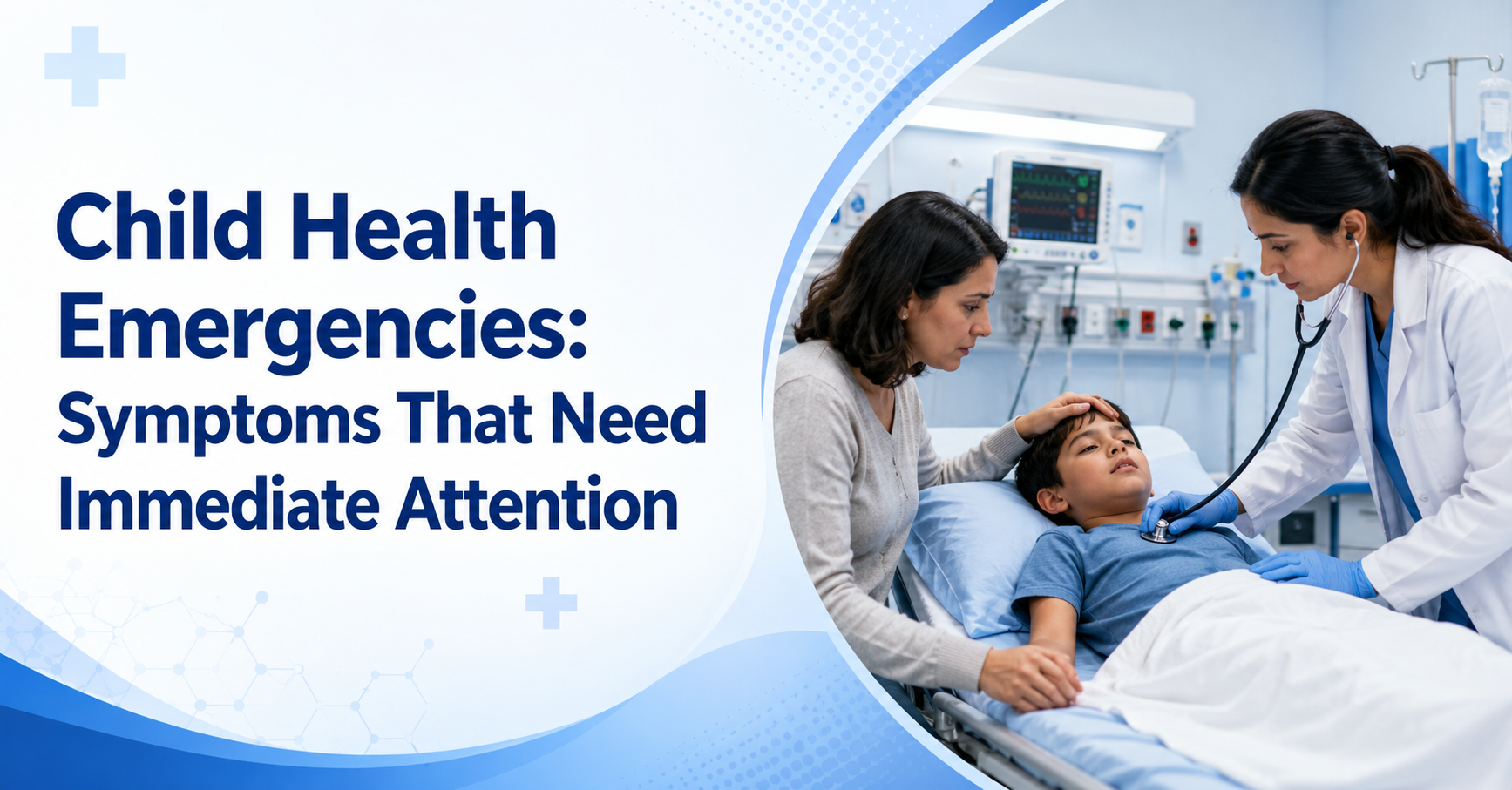
Children don’t always announce danger clearly.
A baby cannot say, “My breathing feels tight.” A toddler may not explain dizziness. A school-going child may only look unusually dull, refuse food, or cry in a way that feels different. Parents often notice the shift before the thermometer or report does.
At Bangalore Hospitals, our team of paediatricians considers multiple symptoms. We look at breathing, alertness, hydration, fever pattern, pain, injury, allergies, seizures, and behaviour. In child health emergencies, waiting too long can turn a manageable situation into a frightening one.
When Should Parents Call a Child’s Doctor Immediately?
Parents should call a child’s doctor immediately if a child has severe breathing difficulty, unusual drowsiness, high fever with warning signs, seizures, suspected poisoning, serious head injury, severe dehydration, or a severe allergic reaction. These symptoms may need urgent medical care.
Here’s the truth parents already know. Sometimes a child doesn’t “look right.” That instinct matters. If breathing changes, the child becomes limp, a seizure occurs, lips look bluish, fever comes with stiffness or rash, or the child stops passing urine normally, home observation may not be enough.
Which Symptoms Should Never Be Ignored?
Emergency symptoms in children include fast or noisy breathing, chest retractions, blue lips, unresponsiveness, seizures, severe dehydration, poisoning, head injury symptoms, and fever with lethargy, stiff neck, rash, or breathing trouble. These signs can worsen quickly in infants and young children.
Watch these closely:
-
Fast breathing or gasping
-
Wheezing, grunting, or chest pulling inward
-
Blue lips or a pale face
-
Repeated vomiting after a head injury
-
Seizure or sudden blank staring
-
No tears, dry mouth, or very low urination
-
Swelling of the lips, face, or throat
-
Swallowing medicines, cleaners, batteries, or chemicals
No parent should be expected to diagnose all this at home. That is what trained pediatric specialists are for.
How Do General Paediatrics and Emergency Pediatric Care Work Together?
General paediatrics handles routine child health, fever, infections, vaccination, nutrition, and growth, while emergency paediatric care focuses on urgent symptoms that may affect breathing, consciousness, hydration, injury, allergy, or neurological safety.
A paediatrician knows that a child is not a smaller adult. The body reacts differently. Fever rises faster. Dehydration can become serious sooner. Breathing distress can shift from mild to scary in a short window.
At Bangalore Hospitals, general paediatrics and pediatric specialists work together when a child needs layered care. A fever may need a paediatrician. A severe injury may need surgery in paediatrics. A seizure may need a neurological evaluation. A breathing emergency may need immediate stabilisation.
Different doors, but same goal: protect the child fast.
What Should Parents Do Before Reaching the Hospital?
Parents should keep the child safe, avoid forcing food or liquids during periods of reduced consciousness, avoid inducing vomiting after poisoning unless advised to do so, carry emergency contact information and medications, and seek emergency care quickly when danger signs appear.
A few calm actions help:
-
Note when symptoms started
-
Carry current medicines
-
Bring allergy details
-
Carry vaccination records if available
-
Keep the child on the side after vomiting
-
Keep seizure surroundings clear
-
Avoid putting anything in the child’s mouth during a seizure
-
Do not delay if you experience breathing difficulty
Which Child Emergency Needs Which Care Route?
|
Symptom Pattern
|
Possible Concern
|
First Action
|
Care Route
|
|
Fast breathing, blue lips
|
Respiratory distress
|
Seek urgent care
|
Emergency pediatrics
|
|
Seizure or unresponsiveness
|
Neurological concern
|
Keep safe, rush care
|
Pediatric specialists
|
|
Severe vomiting, no urine
|
Dehydration
|
Medical evaluation
|
General pediatrics
|
|
Fall with vomiting
|
Head injury
|
Do not wait
|
Emergency + surgery paediatrics
|
Guardians of Little Smiles: Doctor in Paediatrics at Bangalore Hospitals
At Bangalore Hospitals, your child’s health is nurtured by a compassionate team of pediatric specialists who combine clinical excellence with genuine warmth.
-
Dr. Vimala Sampath Kumar
-
Dr. Nalini G Shenoy
-
Dr. Kasireddy
-
Dr. Dharshan
They work together to guide children from their very first days through the challenges of growing up, whether it’s routine check‑ups, complex pediatric conditions, or urgent emergencies. With child‑friendly care, advanced technology, and a deep commitment to reassuring every anxious parent, our doctors ensure that each little patient feels safe, understood, and truly cared for at every step of their health journey.
Final Thoughts
Child health emergencies are emotionally loud. The room changes. The parent’s body knows before the mind catches up. A child who cannot breathe properly, wake properly, drink properly, or respond normally needs quick medical attention.
At Bangalore Hospitals, our children’s doctors work together to bring clarity in exactly that panic-filled moment. General paediatrics supports everyday child health. Pediatric specialists step in when symptoms need focused care. Surgical paediatrics supports children when an injury requires surgery or when a surgical evaluation is needed.
The safest rule is simple: if the child’s breathing, alertness, hydration, movement, or safety looks wrong, don’t wait for the symptom to prove itself.